
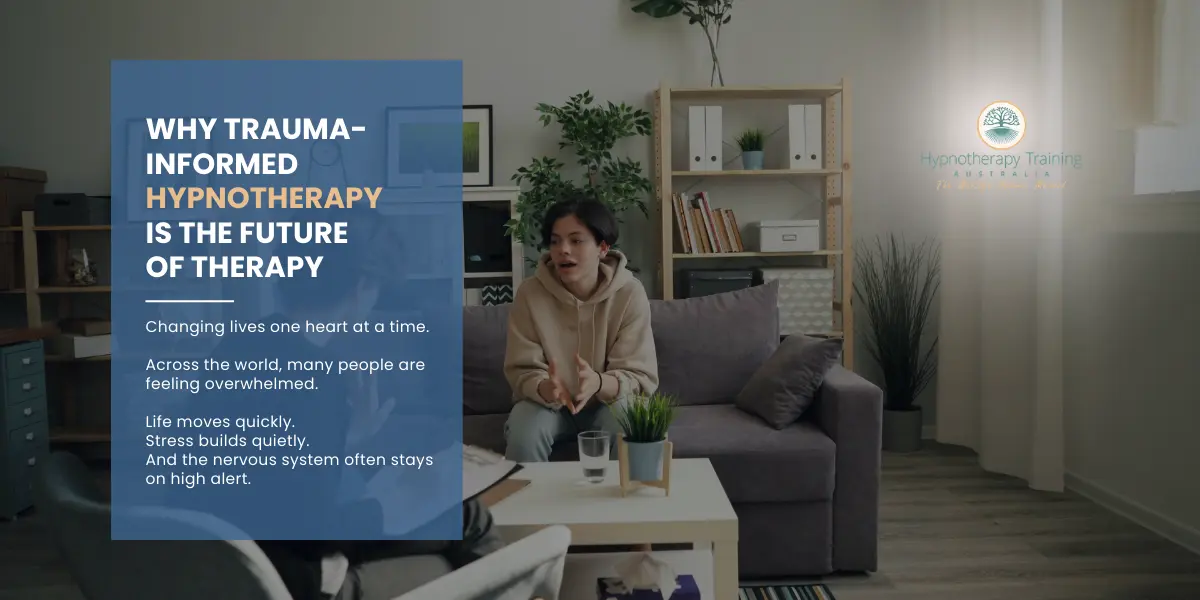
Changing lives one heart at a time.
Many people feel a quiet pull toward this work. They see how often stress lives in the body. How trauma can keep the nervous system on high alert. How someone can look calm on the outside… yet feel unsafe inside. And they want to help.
They want to do it gently.
Safely.
With real understanding.
Clinical trauma hypnotherapy training is built for exactly that. It gives future practitioners a heart-centred path to support people living with trauma, stress, overwhelm and emotional pain. And it does so in a way that honours safety, calm and Care & Understanding.
This work is soft.
Steady.
Deeply meaningful.
And it matters now more than ever.
What Clinical Trauma Hypnotherapy Really Means
Clinical trauma hypnotherapy is a gentle, structured way of working with the subconscious mind and the nervous system.
It is not about pushing people to talk.
It is not about forcing emotional release.
And it is not about reliving painful events.
Instead, it creates a calm and focused state where the mind can soften, the body can settle, and the nervous system can begin to feel safe again.
There is no force.
No pressure.
No retelling painful stories.
This is what makes trauma-informed work different. It is built on emotional safety from the very beginning.
How Trauma Affects the Mind and Body
Trauma often stays in the body long after the event has passed. People may experience:
- racing thoughts
- tight chest or shallow breathing
- panic or sudden fear
- freeze or shutdown
- dissociation
- overwhelm
- hypervigilance
- trouble sleeping
- emotional numbness
These reactions are not weakness. They are the body’s way of trying to stay safe. Trauma can create patterns in the subconscious mind that keep a person in protection mode. Even when life around them is calm. This is why trauma-aware practitioners need more than surface-level skills. They need to understand the nervous system. And they need to know how to guide safety first.
Why Emotional Safety Comes First in Training
Before students can support others well, they need to understand one simple truth. Without safety, nothing settles. If a person feels rushed, pressured or emotionally exposed, the nervous system tightens again. That is why trauma-informed training teaches students to slow down.
To listen.
To ground.
To notice what the body is saying.
Emotional safety in training means learning how to:
- pace sessions gently
- keep the person in control
- avoid overwhelm
- work without story retelling
- support calm before change
This becomes the foundation of everything else.
How Clinical Trauma Hypnotherapy Training Actually Works
Many people imagine training as just theory. But trauma-informed hypnotherapy training is much more than that. It works step by step. Students begin by learning how trauma affects the mind, body and nervous system. They learn why people react the way they do… and how those reactions can soften safely. From there, training builds slowly into practice. Students learn how to:
Understand Trauma Responses
They learn about fight, flight, freeze, shutdown, panic and dissociation. They begin to recognise how the body protects itself.
Create Emotional Safety
They learn how to guide sessions with calm, clear, grounded communication. They learn how to slow the pace and keep the client safe.
Work With the Subconscious Mind
They learn how hypnotherapy helps soften old protective patterns without force.
Support Nervous-System Regulation
They learn grounding, relaxation and gentle calming processes that help the body settle.
Practise With Structure and Care
Training is not rushed. Students are guided step by step, with support, feedback and a strong focus on doing things safely.
This is how confidence grows. Not through pressure. But through steady learning and real understanding.
The DeTrauma Technique — A Core Part of the Training
At Hypnotherapy Training Australia, students learn the DeTrauma Technique. This is a gentle, structured approach designed specifically for trauma-informed work. It helps students learn how to support emotional release without asking a person to retell the whole story.
The DeTrauma Technique focuses on:
- emotional safety
- nervous-system calming
- subconscious pattern release
- grounding and steadiness
People often describe feeling:
- calmer
- lighter
- more grounded
- emotionally balanced
- safe and supported
For students, this technique offers clarity and confidence.
It gives them a safe framework.
A gentle path forward.
And a way of working that stays heart-centred from beginning to end.
Why This Kind of Training Matters More Than Ever
More people than ever are living with overwhelmed nervous systems. They may not always use the word trauma. But they describe:
- feeling on edge
- reacting quickly
- shutting down
- carrying emotional heaviness
- feeling unsafe in their own body
They do not need forceful methods.
They need people who understand how to work gently.
People who know how to create safety.
People who can meet them with calm, patience and respect.
This is why trauma-aware practitioners are so deeply needed now. And this is why clinical trauma hypnotherapy training matters.
What Students Learn as They Grow
This training is not only about helping others. It often changes students too.
Many notice they become calmer.
More grounded.
More aware of how the nervous system works.
They begin to trust their pace.
Their presence.
Their ability to support others gently.
Students often learn:
- subconscious mind work
- emotional safety skills
- nervous-system grounding
- deep relaxation methods
- supportive communication
- how to recognise overwhelm
- how to guide change without force
They also learn how to stay human in the work.
How to lead with kindness.
How to hold space without pressure.
How to support others with warmth and steadiness.
How This Training Helps You Support Others
As skills build, students begin to see how this work helps real people.
They learn how to:
- calm the nervous system
- reduce emotional intensity
- support grounding and inner calm
- create safety through presence
- work gently with trauma responses
This path feels meaningful because students witness real change.
Calm where there was chaos.
Steadiness where there was fear.
Safety where there had been overwhelm.
That is the heart of the work. And that is why so many people feel called to it.
Is This Path Right for You?
You might be wondering:
- Can I learn this if I’m new?
- Will I feel supported while learning?
- Can I study at my own pace?
- Can I really help people living with trauma and overwhelm?
- Can I build a meaningful career doing this work?
The answer is yes.
You can learn step by step.
You can grow gently.
You can build confidence in a safe and supportive environment.
And if you have a caring heart, this path is open to you. If you feel called to help others find calm again, our team would love to guide you. You’re welcome to explore our courses, connect with us, and learn more about how clinical trauma hypnotherapy training works. And when you’re ready, we’re here — with Care & Understanding — to help you take the next step.



Leave A Comment
You must be logged in to post a comment.