
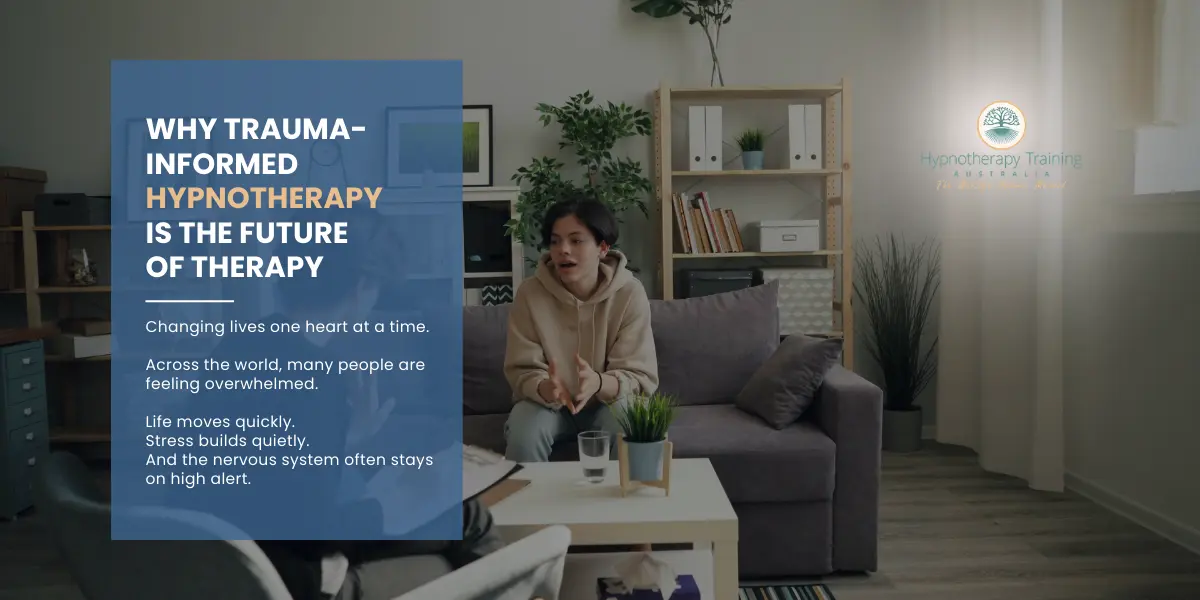
Changing lives one heart at a time.
Many people carry pain in their bodies that did not begin in the body.
Their shoulders stay tight.
Their stomach feels knotted.
Their chest feels heavy.
Their breath is shallow.
Medical tests may show little or nothing.
Yet the discomfort is real.
At the same time, many caring people feel drawn toward helping others who live this way.
They want approaches that are gentle.
Respectful.
Grounded in emotional safety.
Trauma-informed hypnotherapy sits right here.
It offers a soft and steady way to help the body release what it has been holding… and it offers a meaningful path for those who want to learn how to guide that process.
What Physical Symptoms of Emotional Pain Really Mean
Emotional pain does not only live in thoughts.
It lives in the nervous system.
When someone has experienced stress, fear, loss, or overwhelm, the body learns protective patterns.
Muscles tighten.
Breathing changes.
Energy becomes guarded.
The subconscious mind keeps these reactions running automatically. Hypnosis provides a calm, focused state where the system can begin to feel safe enough to soften.
There is no force.
No pressure.
No requirement to explain everything.
Just steadiness.
Gentleness.
Support.
How Emotional Stress Shows Up in the Body
People are often surprised to learn how common this is.
They may experience:
- headaches or pressure
- tight neck or shoulders
- stomach discomfort
- fatigue
- rapid heartbeat
- shallow breathing
- restlessness
- heaviness
- difficulty sleeping
These reactions are not weakness. They are the body’s way of trying to stay safe. When the nervous system has been protecting for a long time, it can forget how to switch off. Trauma-informed hypnotherapy helps the system remember.
Why Emotional Safety Comes First
If a person feels rushed, analysed, or pushed to explain, the body tightens again. Protection increases. That is why emotional safety is the foundation of this work.
There is:
no force
no pressure
no reliving painful experiences
the person remains in control
the pace is slow
grounding comes first
When safety is present, the nervous system can finally rest. And from rest, release can begin.
How Hypnosis Helps the Body Let Go
Trauma-focused hypnosis works with both the subconscious mind and the physical system.
It helps through:
Subconscious Support
Old protective responses can soften when they are no longer needed.
Nervous-System Regulation
The body learns that the present moment is safe.
Deep Relaxation
Breathing slows. Muscles release.
Grounding
The person stays connected and supported.
No Story Required
Change does not depend on retelling pain. It grows from safety.
This is why many people notice physical relief even when very little is spoken.
The DeTrauma Technique — A Gentle Way to Release Stored Tension
Students are introduced to the DeTrauma Technique as a structured, respectful way to work with emotional and physical holding.
It focuses on:
- stabilising the nervous system
- supporting subconscious release
- grounding
- maintaining emotional safety
People often describe feeling:
- lighter
- calmer
- more settled in their body
- clearer in their mind
For students, it offers reassurance. They know how to proceed carefully. They know how to prevent overwhelm.
Why Practitioners Need These Skills More Than Ever
Today, many clients arrive with symptoms that are physical and emotional.
They may not know the connection. But they know they are tired of carrying it. They are searching for someone who can offer:
- Kindness
- Patience
- Safety
- Understanding
- Steady guidance
Practitioners trained in trauma awareness are ready for this.
They know how to slow down.
They know how to listen to the body.
They know how to support release without pressure.
This is the future of effective hypnotherapy.
What Students Learn in Trauma-Informed Training
Training is gentle, step by step, and deeply supportive.
Students learn:
Understanding Mind-Body Links
how emotional stress becomes physical tension
Emotional Safety
how to create trust and steadiness
Subconscious Work
how patterns can change without force
Nervous-System Regulation
how to help the body return to calm
Grounded Presence
how your own steadiness helps others. Many students notice their own symptoms soften as they learn. They breathe differently. They feel more centred. This becomes part of how they support clients.
Is This Path Right for You?
You may be wondering:
- Can I learn to work with physical symptoms gently?
- Can I help without pushing for stories?
- Will I feel supported while learning?
- Can I grow confidence step by step?
- Can this become meaningful work?
The answer is yes.
You can learn safely.
You can grow steadily.
You can be supported throughout your journey.
If you feel drawn to helping people feel comfortable in their own bodies again… if heart-centred, respectful practice matters to you…
We would love to walk beside you.
You are welcome to explore your training options, connect with the team, and take the next step when it feels right — with Care and Understanding, as we continue changing lives one heart at a time.

Leave A Comment
You must be logged in to post a comment.