

Many people are drawn toward hypnotherapy because they genuinely want to help others.
Some have experienced their own journey through stress, trauma or emotional overwhelm and understand how valuable compassionate support can be. Others feel called toward meaningful work that allows them to make a positive difference in people’s lives.
As they begin exploring training, one question often arises very quickly.
What skills actually make a great trauma-informed hypnotherapist?
Many people assume successful practitioners are simply good at hypnosis techniques. While hypnosis skills are certainly important, they are only one part of the picture.
The most effective trauma-informed hypnotherapists develop a combination of professional knowledge, emotional awareness and compassionate communication. They learn how to support people safely while respecting emotional boundaries and nervous system responses.
At Hypnotherapy Training Australia, we believe great practitioners are developed through supportive learning, practical experience and a strong understanding of emotional safety.
Our mission remains beautifully simple and deeply heart-centred.
Changing lives one heart at a time.
A great trauma-informed hypnotherapist is not defined by how much they know alone. They are defined by how safely, compassionately and respectfully they support others throughout their journey.
What Trauma-Informed Hypnotherapy Really Means
Before exploring the skills involved, it helps to understand what trauma-informed hypnotherapy actually means.
Trauma-informed hypnotherapy is a gentle approach that combines subconscious work with emotional safety and nervous system awareness. The focus is not simply helping people change behaviours or habits. The focus is creating a safe and supportive environment where people can feel calm, grounded and emotionally secure.
Trauma-informed practitioners understand that many people arrive carrying experiences of stress, trauma, overwhelm or emotional exhaustion. They recognise that every person has their own story, their own pace and their own emotional needs.
Because of this, the skills required extend far beyond learning hypnosis scripts or relaxation techniques.
Understanding Trauma and Nervous System Responses
One of the most important skills a trauma-informed hypnotherapist develops is understanding the nervous system.
People who seek support may experience a variety of trauma responses without fully understanding why those reactions occur. A skilled practitioner recognises these responses and approaches them with compassion rather than judgement.
Students learn about responses such as:
- flight responses involving restlessness and constant activity
- freeze responses involving emotional stuckness and uncertainty
- shutdown responses involving emotional numbness and exhaustion
- dissociation creating feelings of emotional disconnection
- panic and overwhelming emotional reactions
- hypervigilance and ongoing nervous system tension
- racing thoughts and difficulty relaxing
- tight chest sensations and shallow breathing patterns
These reactions are not weakness.
They are the body’s way of trying to protect itself.
A great trauma-informed hypnotherapist understands these responses and works gently alongside them rather than against them.
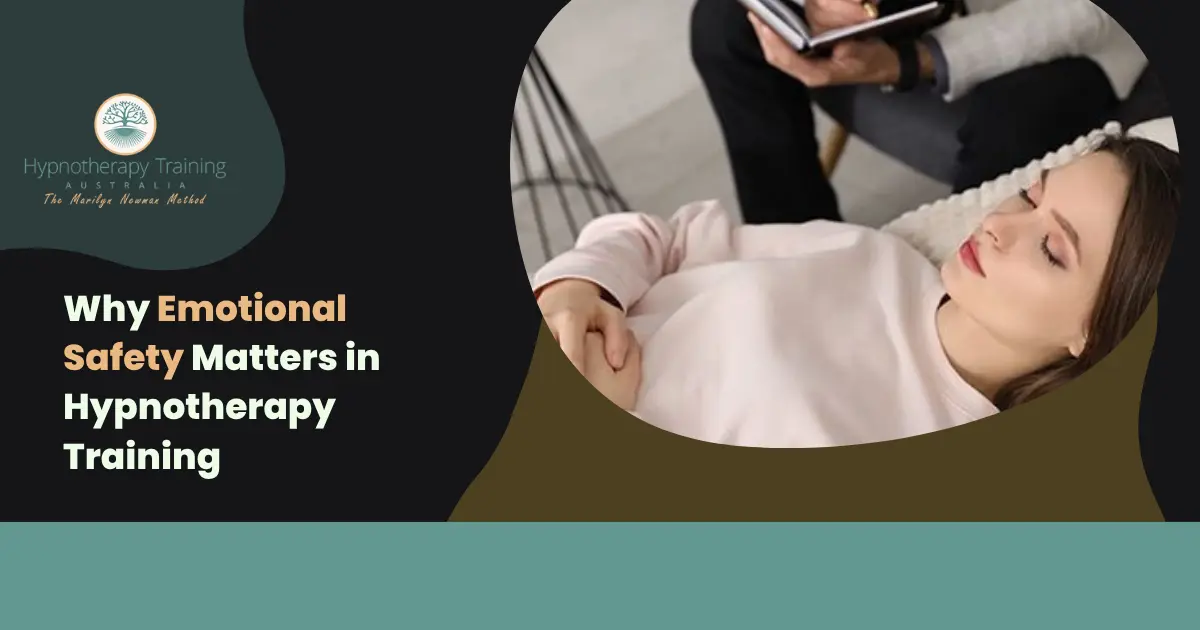
Emotional Safety Is One of the Most Important Skills
If there is one skill that sits at the heart of trauma-informed practice, it is creating emotional safety.
People cannot relax, trust or engage fully when they feel emotionally unsafe. Great practitioners understand how to create environments where people feel respected, heard and supported.
This means understanding that emotional safety comes before everything else.
There is no force.
There is no pressure.
There is no expectation that someone must revisit painful experiences before they feel ready.
Clients remain in control throughout the process.
A great trauma-informed hypnotherapist knows how to slow down when necessary, listen carefully and prioritise emotional wellbeing above rushing outcomes.
Strong Communication Skills Matter More Than Many People Realise
Many new students are surprised to discover how important communication skills become throughout their training.
A great trauma-informed hypnotherapist knows how to communicate clearly, calmly and compassionately. They understand that people often arrive feeling vulnerable, uncertain or emotionally overwhelmed.
Communication involves much more than speaking.
It also involves listening.
Great practitioners develop skills such as:
- active listening without judgement
- asking thoughtful and respectful questions
- creating trust through genuine understanding
- maintaining calm and grounded conversations
- recognising emotional cues during sessions
- responding with compassion and patience
These skills help clients feel supported throughout their experience.
The Ability to Stay Calm and Grounded
A trauma-informed hypnotherapist often works with people experiencing significant stress or emotional overwhelm.
Because of this, one of the most valuable professional skills involves remaining calm and grounded during sessions.
When practitioners bring a grounded presence into the room, clients often feel safer and more relaxed. This calm presence helps create an environment where nervous system regulation can begin naturally.
Students gradually develop:
- emotional self-awareness
- grounded therapeutic presence
- calm communication
- professional confidence
- emotional regulation skills
These abilities become increasingly important as practitioners gain experience supporting others.
Understanding the Subconscious Mind
A great hypnotherapist develops a strong understanding of how the subconscious mind influences behaviour, emotions and habits.
Trauma-informed practitioners learn how subconscious patterns can affect emotional wellbeing, confidence and responses to stress. They understand how hypnosis can help people reconnect with calm, emotional balance and self-awareness.
Students learn:
- how subconscious patterns develop
- how beliefs influence behaviour
- how hypnosis supports relaxation
- how emotional responses become conditioned over time
- how subconscious communication supports positive change
This knowledge helps practitioners work gently and effectively with the people they support.
Learning Safe Trauma-Informed Hypnotherapy Techniques
Professional skills also include learning practical techniques that support emotional safety and nervous system regulation.
A trauma-informed hypnotherapist understands how to guide people gently rather than pushing them too quickly through emotional experiences.
Students learn techniques such as:
- grounding practices
- relaxation techniques
- nervous system regulation approaches
- emotional stabilisation methods
- trauma-informed hypnosis processes
- structured session planning
These techniques become valuable tools for creating safe and supportive therapeutic experiences.
Understanding the DeTrauma Technique™
At Hypnotherapy Training Australia, students learn the DeTrauma Technique™ as part of their trauma-informed education.
The DeTrauma Technique™ was developed with emotional safety as its foundation. The process provides a structured and compassionate approach for supporting people while maintaining emotional stability and client control.
Students learn how the DeTrauma Technique™ supports:
- emotional safety throughout sessions
- nervous system regulation
- emotional stabilisation
- client-centred pacing
- grounded therapeutic support
- respectful trauma-informed practice
Learning this framework helps students develop confidence while understanding how trauma-informed support can be delivered safely.
What Students Learn During Training
Many people wonder whether the skills required can actually be learned.
The answer is yes.
A quality trauma-informed hypnotherapy course is designed to help students build these abilities gradually through structured education and supportive guidance.
Students learn:
- trauma and nervous system awareness
- emotional safety principles
- hypnosis and subconscious communication
- grounding and stabilisation techniques
- communication and listening skills
- professional boundaries
- trauma-informed therapeutic approaches
- client support skills
- personal growth and self-awareness
These skills continue developing throughout training and professional practice.
Why Trauma-Aware Practitioners Are Needed More Than Ever
Today, increasing numbers of people are experiencing stress, emotional overwhelm and nervous system dysregulation.
Many individuals are searching for support that feels safe, compassionate and grounded. They want practitioners who understand emotional safety and recognise how trauma responses influence daily life.
People increasingly seek practitioners who can provide:
- compassionate emotional support
- calm and grounded communication
- trauma-informed understanding
- safe subconscious work
- nervous system awareness
- respectful therapeutic guidance
This growing need makes trauma-informed hypnotherapy an increasingly meaningful profession.
Is This Path Right for You?
You may still have a few questions about yourself.
Can I develop these skills if I am completely new?
Can I learn to support people safely and confidently?
Can I build strong communication and listening abilities?
Will I receive support throughout training?
Can I create a meaningful career helping others?
These are natural questions for anyone considering a new professional pathway.
For many students, the answer becomes clearer as they begin learning more about trauma-informed hypnotherapy and professional training.
The answer is yes.
Great trauma-informed hypnotherapists are not born with every skill already developed. They build those skills through learning, practice, guidance and genuine Care & Understanding. This growth continues well beyond training too — ongoing hypnotherapy supervision helps practitioners keep developing these skills throughout their career.
At Hypnotherapy Training Australia, we provide a warm, supportive and beginner-friendly learning environment where students can develop confidence, professional knowledge and practical skills at a comfortable pace.
If you would like to learn more about our trauma-informed hypnotherapy training programs, we would love to support you on your journey.
We remain here with genuine Care & Understanding.
Together, we continue changing lives one heart at a time.




Leave A Comment
You must be logged in to post a comment.