
Changing Lives One Heart at a Time
Many people arrive at hypnotherapy through a deeply personal doorway. Sometimes it begins with overwhelm. Stress that never seems to switch off. Memories that sit heavy in the body.
Other times it begins with a quiet inner pull. A sense that you want to help people. A feeling that there must be a gentler way to support healing.
Many students say the same thing when they first reach out. They have experienced their own growth. They have seen how powerful subconscious work can be.
And something inside them says: Maybe I could help others too.
At Hypnotherapy Training Australia, we see this moment often. People from many different walks of life feel drawn toward this work.
- Counsellors
- Coaches
- Teachers
- Nurses
- Or people simply looking for a meaningful new path.
Because trauma, stress and overwhelm are rising everywhere, there is a growing need for practitioners who can support people gently and safely. Our mission is simple.
Changing lives one heart at a time. And for many people, that journey begins with one important question. What qualifications do you actually need to become a hypnotherapist?
What Hypnotherapy Really Is
Before looking at qualifications, it helps to understand what hypnotherapy truly involves. Hypnotherapy is not stage hypnosis. It is not mind control. And it is never about forcing someone to relive painful experiences. Clinical hypnotherapy is a gentle and respectful way of working with the subconscious mind.
When the body and mind move into a deeply relaxed state, people can begin to access deeper patterns that influence emotions, behaviour and stress responses. This work can support people experiencing:
- trauma and emotional overwhelm
- anxiety and stress
- panic or racing thoughts
- feeling stuck in repeating patterns
- grief and loss
- low confidence or self-doubt
Hypnotherapy helps people reconnect with a calmer internal state, softly, gently, at their own pace.
Trauma, Stress and the Nervous System
When someone experiences trauma or prolonged stress, the nervous system often stays on high alert. The body is trying to protect itself. These responses are not weakness. They are the body’s natural survival system.
People may notice experiences such as:
- feeling constantly on edge
- racing thoughts that will not slow down
- tightness in the chest or stomach
- sudden waves of panic or overwhelm
- emotional shutdown or numbness
- dissociation or feeling disconnected
- difficulty relaxing or sleeping
These reactions can feel confusing and exhausting. But they are simply signals from a nervous system that needs safety, support and regulation. Trauma-informed hypnotherapy works with the nervous system gently, helping the body rediscover calm and balance.
Emotional Safety Comes First
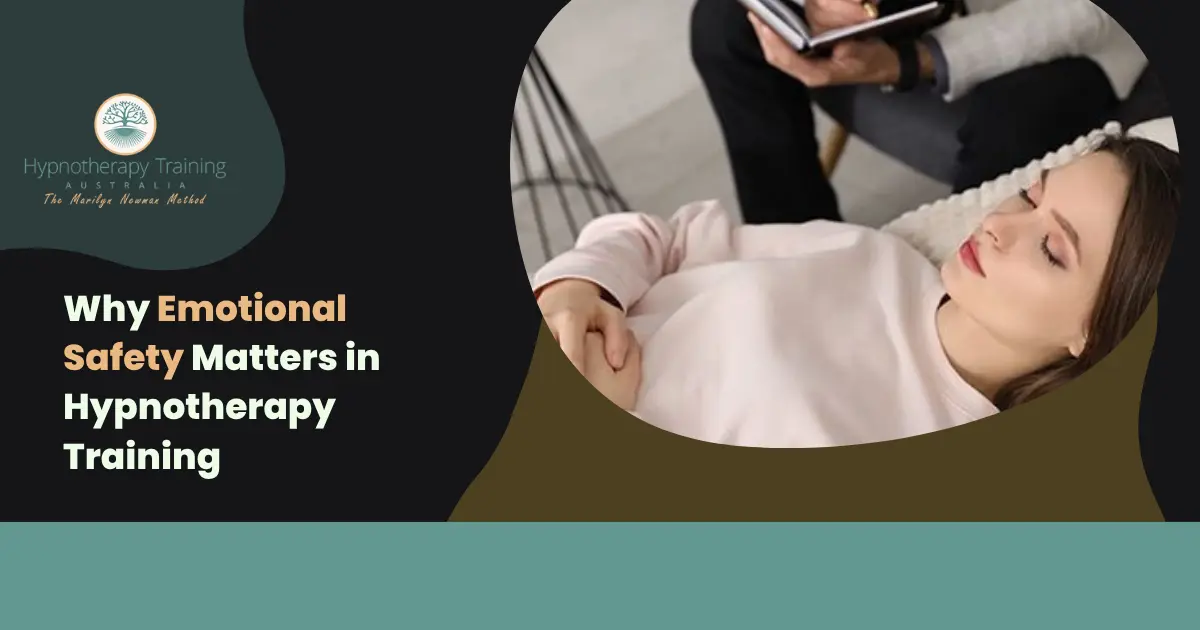
One of the most important principles of trauma-informed hypnotherapy is emotional safety. Healing cannot happen in an environment that feels rushed or forced. That is why this work is always approached slowly and respectfully. There is no force, no pressure.
And most importantly:
- There is no requirement to retell or relive traumatic stories.
- The client remains in control throughout the process.
- Sessions focus on creating safety, grounding and calm within the nervous system.
From that place of stability, deeper patterns can begin to shift.
How Hypnotherapy Supports Healing
Trauma-informed hypnotherapy supports people in several gentle ways. Rather than pushing the mind, it works with the natural rhythms of the nervous system. Sessions often include elements such as:
- guided relaxation
- grounding techniques
- nervous system regulation
- gentle subconscious exploration
- emotional stabilisation
- strengthening inner resources
Over time, people often begin to feel calmer, more balanced, more connected to themselves. This process is never rushed, it unfolds softly, step by step.
The DeTrauma Technique™
At Hypnotherapy Training Australia, students also learn a specialised trauma-informed approach called the DeTrauma Technique™. This method was developed to support trauma healing without requiring clients to relive painful experiences.
The approach focuses on:
- emotional safety
- stabilising the nervous system
- gentle subconscious processes
- maintaining client control throughout the session
The DeTrauma Technique is structured, compassionate and deeply respectful. Students learn how to apply it carefully, always prioritising the wellbeing of the person they are supporting.
Why Trauma-Aware Practitioners Are Needed
Across Australia and around the world, awareness of trauma and mental health is growing. Many people are seeking support that feels safe, compassionate and non-judgemental. They want practitioners who understand:
- How the nervous system works
- How stress and trauma affect the body
- How to support emotional regulation
This is why trauma-informed practitioners are becoming increasingly important. People are searching for professionals who can meet them with presence, calm, understanding. And for many students, learning hypnotherapy becomes a way to offer that support to others.
What Qualifications Do You Need?
Unlike many traditional professions, there is no single government qualification required to become a hypnotherapist in Australia. However, professional training is essential. Quality hypnotherapy training teaches students how to work safely, ethically and effectively with clients.
Most practitioners begin with structured training programs such as:
- Certificate in Clinical Hypnotic Sciences
- Advanced Diploma in Clinical Trauma Hypnotherapy
- Masters Diploma in Clinical Hypnotherapy
These courses provide the foundational knowledge and practical skills needed to begin working professionally. Graduates may also choose to join professional associations such as:
- Australian Hypnotherapy Association
- Australian Society of Clinical Hypnotherapists
- Guild of Australian Hypnotherapists
- International Institute for Complementary Therapists
These organisations help maintain professional standards. For those already practicing, supervision and professional development is key to staying qualified
What Students Learn During Training
Training as a hypnotherapist is not only about techniques. It is also about personal growth, emotional awareness and developing a grounded presence. Students often learn skills such as:
- understanding trauma responses
- nervous system regulation
- subconscious communication
- grounding and stabilisation techniques
- creating emotional safety in sessions
- ethical client support
- compassionate listening and communication
- guiding deep relaxation and hypnosis
Students also gain something equally valuable. A deeper understanding of themselves. Many people say the training becomes a journey of personal transformation as well as professional development.
A Supportive Learning Environment
At Hypnotherapy Training Australia, training is designed to feel welcoming and supportive. Students learn step by step. There is space to ask questions, grow, build confidence. Many students arrive feeling uncertain. You can see the diverse backgrounds of our people who have successfully made this transition
Is This Path Right for You?
If you are reading this, you may be wondering:
- Can I learn hypnotherapy if I’m completely new?
- Can I change careers and do something meaningful?
- Can I help others in a gentle and supportive way?
- Can I build a career that truly aligns with who I am?
These are very natural questions. And the answer, for many people, is yes. Hypnotherapy training welcomes people from many backgrounds. What matters most is not previous qualifications. What matters most is your willingness to learn, your compassion for others, and your desire to grow.
If something in this path resonates with you, we invite you to explore the journey further. When you are ready, you can learn more about our training programs and connect with our team. We would be honoured to support you. With Care & Understanding, and a shared commitment to changing lives one heart at a time.




Leave A Comment
You must be logged in to post a comment.