
Changing Lives One Heart at a Time
Sometimes this path begins in a very quiet way. You may feel tired of work that does not mean much to you. You may feel drawn to something more human, more gentle, and more grounded. You may also be carrying your own stress, overwhelm, or life experience, and that may shape the way you want to show up for others.
For many people, the interest in hypnotherapy training does not begin with a business plan. It begins with a feeling. A feeling that you want to support others. A feeling that calm matters. A feeling that people need more emotional safety, not more pressure.
You may be wondering whether this path is really worth it. Is it worth the money? Is it worth the time? Is it worth the emotional investment? Can it lead to meaningful work, or will it leave you with a hypnotherapy courses certificate and not much else?”
These are fair questions. In fact, they are the right questions.
This path should feel thoughtful, not rushed. It should feel grounded, not confusing. It should help you understand not only hypnosis, but how to support people safely and gently.
That is why this question matters so much. Not just “Can I study this?” but “Is hypnotherapy training worth it for the kind of person I want to become?”
At its best, this work is about helping people find inner calm, emotional balance, and a safer way forward. It is about changing lives one heart at a time.
What Hypnotherapy Really Means
Before you decide whether training is worth it, it helps to understand what hypnotherapy really is.
Hypnotherapy is a guided approach that works with the subconscious mind. The subconscious mind stores patterns, beliefs, emotional responses, and habits. Many of the ways we react to life sit beneath our everyday thinking. That is why talk alone does not always create change. Sometimes the deeper patterns need a gentler way in.
In hypnotherapy, a person is guided into a calm and focused state. This does not mean they lose control. It does not mean they are forced to do anything. It means the mind becomes quieter, the body becomes more settled, and the person is better able to connect with what is happening beneath the surface.
This is why many people are drawn to hypnotherapy. It feels softer. Slower. More supportive. It creates space for inner calm and deeper awareness.
When training is done well, students do not just learn scripts or techniques. They learn how to guide this process safely. They learn how to listen. They learn how to work with the subconscious mind in a way that is steady, respectful, and heart-centred.
Trauma and the Nervous System
If you are asking what to look for in a hypnotherapy course, one of the biggest things is trauma awareness. This matters because many people live with stress patterns that sit deep in the nervous system.
When the nervous system feels unsafe, it can move into protective responses such as:
- flight
- freeze
- shutdown
- dissociation
- panic
- hypervigilance
- racing thoughts
- tight chest
These reactions can feel confusing. They can feel frustrating. They can make a person feel like they are failing, when really the body is trying to help.
These reactions are not weakness. They are the body’s way of trying to protect itself.
This is why trauma informed hypnotherapy training matters so much. It helps students understand that overwhelm is not something to push past. It is something to work with gently. A right hypnotherapy course in Australia should help students understand how the nervous system responds, how to notice signs of overwhelm, and how to support people in a calm and grounded way.
Without this knowledge, training can feel incomplete. With it, the whole approach becomes safer and more meaningful.
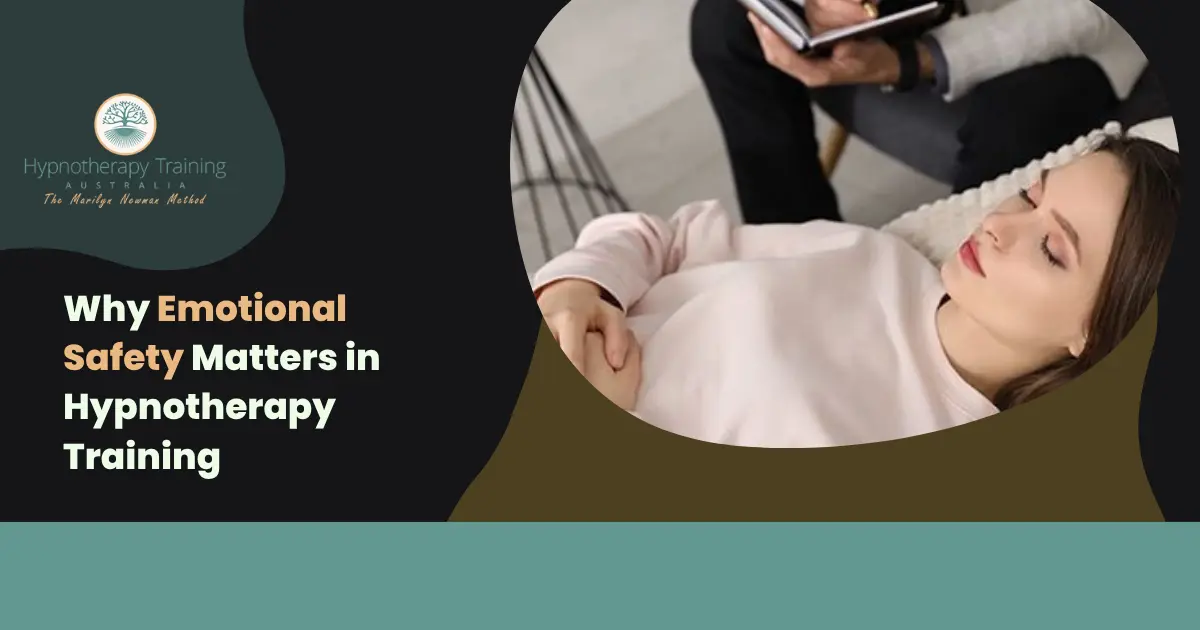
Emotional Safety Comes First
One of the clearest signs of a worthwhile course is emotional safety. If a training programme teaches technique without safety, that is a problem. If it rushes people into deep work without helping them understand the nervous system, that is also a problem.
Trauma-informed work starts somewhere simpler and wiser. It starts with safety.
There is no force. No pressure. No requirement to relive painful stories. Clients remain in control.
That matters. It matters for the person receiving support, and it matters for the student learning how to offer it. When emotional safety comes first, students build a much stronger foundation. They learn not only what to do, but how to do it with compassion.
This is also why many people now prefer trauma informed hypnotherapy training over general training. They want an approach that respects the person in front of them. They want a learning environment that is soft, steady and supportive. They want to know they are being taught how to support others safely, not just how to perform a method.
So, Is Hypnotherapy Training Worth It?
Yes, hypnotherapy training can be worth it, but not every course is worth it.
That is the honest answer.
If you’ve decided this path is right for you, the next step is learning how to become a hypnotherapist in Australia. It is worth it when the training is structured, trauma-informed, supportive, and practical. It is worth it when it helps you grow as a person while also helping you build real-world skills. It is worth it when the course is not just about information, but about learning how to hold space with care and understanding.
For many people, worthwhile training means several things at once. It means learning a meaningful skill. It means opening a possible new career path. It means doing work that feels aligned with who they are. It means understanding the nervous system, the subconscious mind, and the importance of emotional safety. It also means not being left alone to figure everything out.
If the course helps you build grounded confidence, teaches you how to support others safely, and gives you a clear path forward, then yes, it can be a very worthwhile investment.
When Hypnotherapy Training Is Worth It
Proper Structure
A worthwhile programme should have a clear pathway. You should know what you are learning, why you are learning it, and how each stage builds on the last one. Good structure helps students feel calm and supported rather than scattered and unsure.
Trauma-Informed Learning
A strong course does not treat trauma awareness as an extra. It places it near the centre. That means students learn about emotional safety, nervous system responses, grounding, and how to work gently with overwhelm.
Safe Practical Skill Building
The best learning is not just theory. Students need guided practice. They need to learn how to listen, how to guide hypnosis safely, and how to work with the subconscious mind in a grounded way.
Supportive Guidance
Many people searching for hypnotherapy training for beginners worry they will be left behind. Good training does the opposite. It supports students step by step. It welcomes beginners. It creates a warm, safe, beginner-friendly environment where questions are allowed and growth is supported.
Personal and Professional Growth
When people ask, “Can hypnotherapy become a real career?” they are often asking two things at once. Will this lead somewhere meaningful? And will I grow through the process? Good training can do both. It can help shape your future work and also deepen your understanding of yourself.
When a Course May Not Be Worth It
Not all hypnotherapy certification programmes offer the same value. Some may look polished on the surface but still leave big gaps in practice and support.
A course may not be worth it if it feels rushed. If everything is squeezed into a short time with little space for reflection or practice, students may leave without real confidence.
It may not be worth it if it ignores trauma. If a course teaches hypnosis as if every person responds the same way, that is too simple and not safe enough.
It may not be worth it if it teaches techniques without emotional safety. Knowing what to say is not enough. Students need to know when to slow down, how to notice overwhelm, and how to support regulation.
It may also not be worth it if there is little student support. When people invest in a hypnotherapy course in Australia, they want to feel guided, not abandoned. They want feedback, clarity, and reassurance.
Finally, credibility matters. If a course has unclear structure, vague outcomes, or no trust signals, it becomes much harder to know whether it is a wise investment.
How Trauma-Informed Hypnotherapy Helps
Trauma-informed hypnotherapy helps by working with the whole person gently. It does not push for breakthroughs at any cost. It focuses on calm, stability, and emotional balance.
This approach can support people through grounding, deep relaxation, subconscious work, and nervous system regulation. It helps create a space where the body can settle and the mind can soften. When that happens, people often feel more present, more steady, and more able to process life with greater calm.
For students, this matters because it changes the kind of practitioner they become. They do not just learn hypnosis guidance. They learn to recognise when someone needs more grounding. They learn how to work slowly and safely. They learn how to support others with compassion, not pressure.
That makes the training feel more meaningful and more responsible.
The DeTrauma Technique™ and Why It Matters
A trauma-informed path becomes even more valuable when it includes an approach like the DeTrauma Technique™. This method is designed to work gently with the subconscious mind while protecting emotional safety.
It does not require people to relive painful stories. It does not depend on pushing through overwhelm. Instead, it helps stabilise the nervous system and supports gentle inner change in a safer way.
This kind of learning can make a big difference when you are comparing options. General training may teach hypnosis methods, but trauma-aware training teaches students how to use those methods with greater care. That can shape the whole quality of their future work.
When a course includes a clear trauma-informed approach, students often leave with more than knowledge. They leave with a stronger inner foundation. They feel more grounded. More responsible. More ready to support others with calm and clarity.
Why Trauma-Aware Practitioners Are Needed Now
More people are speaking openly about stress, trauma, overwhelm, and emotional exhaustion. At the same time, many are searching for support that feels gentle, human, and respectful.
That means there is a growing need for practitioners who understand emotional safety. People do not just want someone who knows a method. They want someone who knows how to listen, how to slow down, and how to create a grounded space.
This is one reason hypnotherapy training can be worth it as a career path. It can prepare you for meaningful work that matters in today’s world. It can help you support others in a way that feels calm, heart-centred, and deeply human.
For the right person, that is not a small thing. That is meaningful work.
What Students Learn in Training
A strong hypnotherapy training programs help students build both practical skills and inner steadiness. Depending on the course structure, students may learn:
- trauma responses
- nervous system regulation
- emotional safety
- grounding techniques
- subconscious communication
- hypnosis guidance
- compassionate listening
- personal growth
In a supportive programme, these areas are not taught in a rushed or overly clinical way. They are taught step by step, with guidance and reflection. That is especially important for people looking at clinical hypnotherapy training or hypnotherapy training for beginners, because both groups need clarity, not confusion.
Trust also matters here. Reassurance matters. Internationally accredited training, more than 500 graduates, 5-star student reviews, and a supportive step-by-step learning model all help show that a course is built with care. Used naturally, these signals help people feel safer about their decision.
Is This Path Right for You?
You may still be wondering whether this path is truly for you. That is normal.
Can I learn this if I’m new? Can I change careers? Can I help others safely?
The answer is yes.
Yes, beginners can learn this when the training is clear and supportive. Yes, people can change direction and move into more meaningful work. Yes, you can learn to support others safely when the course teaches emotional safety, trauma awareness, practical skill building, and grounded guidance.
If you are looking at hypnotherapy training in Australia and asking whether it is worth it, the real question may be this: does the course help you become the kind of practitioner you want to be?
If the answer is yes, then the path may be worth far more than a certificate. It may become a foundation for personal growth, professional development, and meaningful work that supports others with compassion.
One academy built around this approach is Hypnotherapy Training Australia, where the learning model is trauma-informed, heart-centred, and designed to support students step by step.
With Care & Understanding.
Changing lives one heart at a time.





Leave A Comment
You must be logged in to post a comment.